
Financial challenges can develop over time, making it harder to keep up with monthly obligations. If collection calls have become routine, foreclosure or repossession is becoming a concern, or your debt continues to grow despite your best efforts, you may be wondering what options are available. Many people reach a point where they need to explore a long-term solution rather than continue managing debt month after month.
Bankruptcy is a legal process designed to help individuals and families address overwhelming debt while providing certain protections from creditor collection efforts. Depending on your financial situation, filing for bankruptcy in Louisiana may allow you to eliminate qualifying debts or reorganize them into a manageable repayment plan.
Contact Simon Fitzgerald today so our bankruptcy attorneys can help evaluate Chapter 7 and Chapter 13 bankruptcy, and make informed decisions about the path that best fits your financial goals.
Shreveport / Monroe • Alexandria • Lafayette / Lake Charles
Signs Bankruptcy May Be Worth Exploring
Most people do not consider bankruptcy after a single financial setback. Instead, they often spend months or even years trying to catch up through budgeting, debt consolidation, payment arrangements, or other solutions, only to realize those efforts are no longer enough. If your financial situation continues to worsen despite those attempts, it may be time to learn whether bankruptcy could provide meaningful relief.
Common signs include:
- Credit card balances continue growing despite regular payments
- Wage garnishments are reducing household income
- Foreclosure or repossession has become a concern
- Creditors have filed lawsuits or threatened legal action
- Monthly debt payments exceed what your household can reasonably afford
Every financial situation is different, which is why it is important to review your options before deciding how to move forward.
How Does Bankruptcy Work In Louisiana Step By Step?
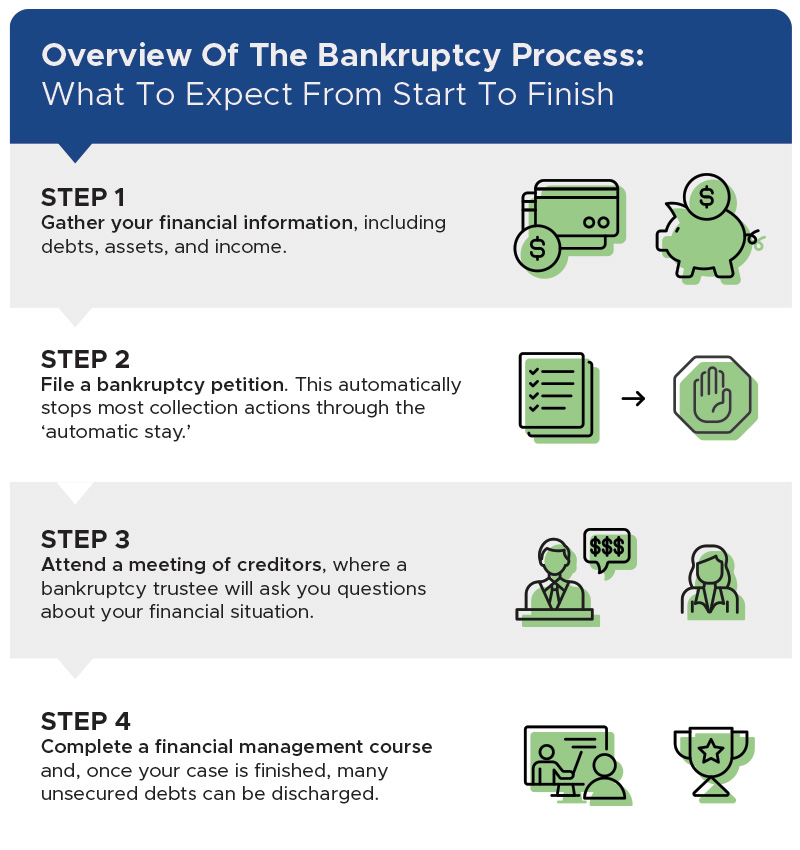
Understanding the bankruptcy process can make an important financial decision feel less overwhelming. While every case is unique, most Chapter 7 and Chapter 13 bankruptcy cases follow the same general steps, beginning with a review of your financial situation and ending with either the discharge of eligible debts or the successful completion of a repayment plan.
Knowing what to expect at each stage can help you feel more prepared as you explore your options.
The Initial Consultation And Financial Evaluation
The first step in the Louisiana bankruptcy process is reviewing your overall financial picture. Rather than focusing on a single debt, this evaluation considers your income, expenses, assets, liabilities, and long-term financial goals to determine whether bankruptcy is likely to provide meaningful relief.
This initial review also helps determine whether Chapter 7, Chapter 13 bankruptcy, or another debt-relief option may be appropriate. Understanding your options early allows you to make an informed decision based on your individual circumstances.
The Means Test And Eligibility Review
Before filing for Chapter 7 bankruptcy, eligibility requirements must be reviewed to determine whether you qualify under federal law. This process includes evaluating your income and other financial information as part of the bankruptcy means test. Under 11 U.S.C. § 109, individuals must meet certain eligibility requirements before filing for bankruptcy protection.
If Chapter 7 is not available, Chapter 13 bankruptcy may still provide an opportunity to reorganize debt through a court-approved repayment plan. Reviewing your eligibility before filing helps ensure you pursue the option that best fits your financial situation.
Preparing The Bankruptcy Petition And Supporting Documents
Once you decide to move forward, the next step is to prepare the bankruptcy petition and the supporting financial documents required by the court. This includes gathering information about your income, debts, assets, expenses, and other financial records that accurately reflect your current circumstances.
Complete and accurate documentation is an important part of the bankruptcy process. Providing thorough information from the beginning can help avoid unnecessary delays and allow your case to move through the court system more efficiently.
Filing With The Bankruptcy Court
Filing the bankruptcy petition officially begins your bankruptcy case. Once the required documents are submitted, your case enters the federal bankruptcy court system, and the applicable procedures and deadlines begin to apply.
For many people, filing also triggers the automatic stay, which generally stops most collection activities, including collection calls, lawsuits, wage garnishments, and foreclosure proceedings, while the bankruptcy case is pending. Understanding what happens after filing can help you prepare for the next stages of the Louisiana bankruptcy process.
What Changes Immediately After A Bankruptcy Case Is Filed
Filing for bankruptcy marks the beginning of a legal process that can provide important protections while your case moves through the court system. Although every situation is different, many people notice changes almost immediately after their case is filed.
One of the most significant protections available under federal bankruptcy law is the automatic stay. Under 11 U.S.C. § 362, the automatic stay generally takes effect as soon as a bankruptcy case is filed and can temporarily stop many collection activities that were creating financial pressure beforehand.
Depending on your circumstances, this may include collection calls, collection lawsuits, wage garnishments, foreclosure proceedings, and vehicle repossession efforts.
For many individuals and families, the automatic stay provides an opportunity to focus on the bankruptcy process without the constant stress of ongoing collection activity. If you are wondering what happens after filing for bankruptcy in Louisiana, this protection is often one of the first changes you experience.
The automatic stay does not apply in every situation, and certain exceptions or limitations may affect the protections available in your case. Understanding how the automatic stay works can help you better evaluate whether bankruptcy is an appropriate solution for your financial circumstances.
What Happens Between Filing And The Final Outcome
After a bankruptcy case is filed, several important steps take place before the court reaches a final outcome. While the process follows a general timeline, each case is unique, and the exact sequence may vary depending on the type of bankruptcy and the details of your financial situation.
The Bankruptcy Trustee’s Role In The Case
After your bankruptcy petition is filed, the court appoints a bankruptcy trustee to oversee certain aspects of your case. The trustee reviews the information submitted with your petition, verifies that the required documents have been provided, and administers the case in accordance with federal bankruptcy law.
If additional information is needed, the trustee may request clarification or supporting documentation. Providing complete and accurate financial information from the beginning can help your case move through the process more efficiently.
What To Expect At The 341 Meeting Of Creditors
The 341 meeting of creditors is a required step in most bankruptcy cases, but it is usually much less formal than many people expect. Rather than taking place in a courtroom before a judge, the meeting gives the bankruptcy trustee an opportunity to verify the information in your petition and ask questions about your financial circumstances.
Although creditors have the right to attend and ask questions, they often do not appear. For many people, the meeting is brief and straightforward, especially when the required documentation has already been provided.
Resolving Creditor Questions And Documentation Requests
Occasionally, the bankruptcy trustee or a creditor may request additional information before the case can continue. These requests are a normal part of many bankruptcy cases and do not necessarily indicate that there is a problem with your filing.
Responding promptly and providing complete documentation can help avoid unnecessary delays. Once any outstanding questions are resolved, the bankruptcy process can proceed to the next stage.
Why Chapter 7 And Chapter 13 Can Lead To Very Different Outcomes
Chapter 7 and Chapter 13 bankruptcy are designed to address debt in different ways. Understanding how each option works can help you determine which approach best suits your financial circumstances and long-term goals.
Moving Toward A Chapter 7 Discharge
Chapter 7 bankruptcy is generally intended to eliminate eligible unsecured debt through a relatively streamlined process. While the court reviews your assets to determine whether any nonexempt property is available to satisfy creditor claims, many individuals who qualify can keep much or all their property under applicable exemption laws.
Because Chapter 7 cases are often completed in just a few months, eligible debts may be discharged sooner than they would under other forms of bankruptcy. For individuals seeking a fresh financial start without a long-term repayment plan, Chapter 7 may provide an effective solution.
Moving Toward Chapter 13 Plan Confirmation
Chapter 13 bankruptcy takes a different approach by allowing eligible individuals to repay certain debts over time through a court-approved repayment plan. Instead of seeking an immediate discharge of qualifying debts, Chapter 13 focuses on creating a structured plan based on your income, expenses, and financial obligations.
Before the repayment period begins, the bankruptcy court must approve the proposed Chapter 13 plan. Once confirmed, you make payments according to the plan for the required period, after which eligible remaining debts may be discharged. For many people, Chapter 13 offers an opportunity to catch up on certain obligations while working toward greater financial stability.
Mistakes That Can Complicate The Bankruptcy Process
Preparing for bankruptcy involves providing complete and accurate financial information to the court. Understanding what information is required and why it matters can help your bankruptcy case move through the process more efficiently and reduce the likelihood of unnecessary delays.
Some issues may require additional review by the bankruptcy trustee or the court, particularly if financial records are incomplete or transactions occurred shortly before filing for bankruptcy in Louisiana. Common examples include:
- Transferring assets before filing
- Failing to disclose all income, debts, or assets
- Taking on significant new debt shortly before filing
- Not responding to requests from the bankruptcy trustee or the court
- Selling property for substantially less than its value before filing
- Repaying certain creditors while leaving others unpaid
These situations do not automatically prevent someone from receiving bankruptcy relief, but they may require additional documentation or explanation before the case can move forward.
Providing complete and accurate information in your bankruptcy petition and responding promptly to any requests from the trustee or the court can help keep the process on track and allow your case to proceed as smoothly as possible.
Questions To Consider Before Filing Bankruptcy
Can I Keep My Home If I File Bankruptcy In Louisiana?
Possibly. Many people can keep their homes when filing for bankruptcy in Louisiana, but the outcome depends on factors such as the type of bankruptcy you file, the equity in your home, and your ability to meet certain financial obligations. Reviewing your situation can help you better understand what options and protections may be available.
How Long Does A Bankruptcy Case Usually Take?
The timeline depends on the type of bankruptcy you file. Many Chapter 7 bankruptcy cases are completed within a few months, while Chapter 13 cases generally last 3 to 5 years because they involve a court-approved repayment plan. Understanding the expected timeline is one of several factors that can help you determine which option best fits your financial goals.
Will Bankruptcy Eliminate All Of My Debts?
Not always. Bankruptcy can discharge many types of unsecured debt, including certain credit card balances and medical bills, but some obligations may not be eliminated through the bankruptcy process. The types of debt that may be discharged depend on your individual circumstances and the chapter of bankruptcy you file.
Can I File Bankruptcy More Than Once?
Yes, in some situations. Federal bankruptcy law allows individuals to file bankruptcy more than once, although eligibility requirements and waiting periods vary depending on the type of bankruptcy previously filed and the relief you are seeking. Reviewing your filing history can help determine whether another bankruptcy filing is available.
Will Filing Bankruptcy Permanently Damage My Credit?
No. Filing for bankruptcy can affect your credit, but those effects are not permanent. Many people begin rebuilding their credit after their bankruptcy case is completed, and for some, addressing overwhelming debt through bankruptcy provides a stronger financial foundation than continuing to struggle with unmanageable payments. Understanding both the short-term and long-term effects of bankruptcy can help you make an informed decision about your financial future.
Deciding Whether Bankruptcy Is The Right Solution
Financial challenges look different for everyone, which is why there is no one-size-fits-all approach to debt relief. Learning more about the bankruptcy process and your available options can help you decide whether Chapter 7 bankruptcy, Chapter 13 bankruptcy, or another solution is the best fit for your circumstances.
The attorneys at Simon Fitzgerald help individuals and families throughout Louisiana understand their options and make informed decisions about their financial future. Schedule a consultation to discuss your situation, ask questions about filing for bankruptcy in Louisiana, and learn whether bankruptcy may provide the fresh start you are looking for.